How to Protect Yourself from Radiation in Drinking Water
Share
What Are Radioactive Materials?
Radioactive materials are substances that emit ionizing radiation, a form of energy capable of dislodging
electrons from atoms present in the atmosphere and water. This radiation can also cause the breakdown of
molecules within the human body.
Is Radiation Found in Your Water System?
Drinking water for more than 170 million Americans contains radioactive elements at levels that may increase
the risk of cancer, according to an
EWG analysis
of 2010 to 2015 test results from public water systems nationwide.
How Does Radiation End Up in Our Drinking Water?
Radioactive elements find their way into groundwater through natural deposits within the Earth's crust. These
elements can become more concentrated when activities like uranium mining or oil and gas drilling disturb the
soil, releasing them.
Adding to this concern, in early 2021, Japan announced its plan to release over 1 million tons of contaminated
water from the damaged Fukushima nuclear power plant into the Pacific Ocean. On August 24, 2023, amid ongoing
debates about this contentious discharge plan, Japan began releasing treated radioactive water from the severely
impacted
Fukushima nuclear power plant.
While Japan insists that the wastewater, including the radioactive isotope tritium and possibly other elements,
won't be a threat, Japanese scientists haven't offered enough proof to ensure harmful elements won't enter the
ocean. Neighboring countries and experts differ, suggesting this release might endanger future environments,
reaching ecosystems as far as North America. This discharge by Japan raises significant concerns about the
safety of our drinking water.
Most pollutants swiftly travel with currents across the Pacific Ocean. A 2021 study estimates the core polluted
area will reach North America's coast within about 5 years of the initial release, expanding across the North
Pacific and potentially worldwide within a decade. Furthermore, ocean water with radioactive particles can
evaporate, forming vapor that contaminates land through rainfall, posing a heightened threat to humanity.
How Do Radioactive Contaminants Affect Human Health?
Radioactive contaminants present in Nuclear Wastewater pose a significant threat to human health, wildlife, and
the environment. They can make people sick, make the soil inhospitable to plants, and cause mutations in
animals.
Here is a more detailed exploration of the potential health effects associated with exposure to radioactive
contaminated water.
Acute Radiation Syndrome
High and sudden radiation exposure can lead to acute radiation syndrome, resulting in symptoms like nausea,
vomiting, diarrhea, weakness, and even death. Severity depends on radiation dose.
Cancer Risk
Prolonged exposure to lower radiation levels increases the risk of cancer development. Ionizing radiation,
common in nuclear activities, damages cellular DNA and fosters cancerous growth over time
Genetic Effects
High radiation doses can trigger genetic mutations by damaging cell DNA. Though passing on mutations to
future generations is unlikely, potential genetic abnormalities can arise in offspring.
Long-Term Health Impacts
Continuous exposure to even modest radiation levels can lead to persistent health issues, including
heightened risks of cancer, cardiovascular diseases, and thyroid disorders.
Developmental Effects
Radiation exposure during pregnancy poses a significant risk to fetal development, potentially causing birth
defects and developmental challenges. Fetal cells' rapid division rate makes them more vulnerable to
radiation damage.
Cumulative Nature
Radiation exposure's effects accumulate over time, meaning repeated exposures, even at lower levels, can
lead to substantial cumulative doses. These doses can contribute to a range of health problems. This
underscores the need for caution and measures to reduce radiation exposure whenever possible.
Acute Radiation Syndrome
High and sudden radiation exposure can lead to acute radiation syndrome, resulting in symptoms like
nausea, vomiting, diarrhea, weakness, and even death. Severity depends on radiation dose.
Cancer Risk
Prolonged exposure to lower radiation levels increases the risk of cancer development. Ionizing
radiation, common in nuclear activities, damages cellular DNA and fosters cancerous growth over time
Genetic Effects
High radiation doses can trigger genetic mutations by damaging cell DNA. Though passing on mutations
to future generations is unlikely, potential genetic abnormalities can arise in offspring.
Long-Term Health Impacts
Continuous exposure to even modest radiation levels can lead to persistent health issues, including
heightened risks of cancer, cardiovascular diseases, and thyroid disorders.
Developmental Effects
Radiation exposure during pregnancy poses a significant risk to fetal development, potentially causing
birth defects and developmental challenges. Fetal cells' rapid division rate makes them more
vulnerable to radiation damage.
Cumulative Nature
Radiation exposure's effects accumulate over time, meaning repeated exposures, even at lower levels,
can lead to substantial cumulative doses. These doses can contribute to a range of health problems.
This underscores the need for caution and measures to reduce radiation exposure whenever possible.
Insights From Officials and Experts
How to Protect Yourself from Radiation in Drinking Water
Reducing radioactive materials in drinking water is of utmost importance. However, these materials can be
challenging to eliminate. For instance, the Centers for Disease Control and Prevention (CDC) emphasize that boiling water alone cannot remove radioactive materials. Fortunately, removing harmful
radioactive materials from the water you use and drink is attainable. Here are some expert recommendations:
Reverse Osmosis (RO)
The Environmental Protection Agency (EPA) highlights RO as highly effective in purging water from pollutants. RO membranes, featuring pores as small
as 0.0001 microns, enable water molecules to pass while capturing radioactive elements like uranium and
radium. This guarantees a supply of cleaner and safer drinking water for your family.
The Environmental Working Group (EWG) acknowledges reverse osmosis as a potentially superior technology for combating uranium-radioactive
elements.
Additionally, the
Minnesota Department of Health
recommends considering home water treatment systems like ion exchange water softeners and reverse osmosis
systems to lower radionuclide levels in your water.
Ion Exchange
An alternative method for removing radioactive materials is ion exchange. Water flows through a resin
containing exchangeable ions. These ions form stronger bonds and displace weaker radioactive materials in the
water, leaving the radioactive materials in the resin. Radium, a cation (positively charged ion), swaps with
other cations like potassium or sodium. Uranium, an anion (negatively charged ion), exchanges with other
anions like chloride.
Carbon Filtration
Carbon filtration is also effective in removing radioactive materials from water. Water passes through a
filter made of activated carbon. The carbon absorbs and captures radioactive contaminants within the water,
contributing to improved water quality.
Why Choose Waterdrop RO Systems?
Each of these technologies is effective in reducing radioactive contaminants from water. You can never remove
100% of radioactive contaminants from water. You can, however, remove more of them if you combine the use of
these technologies.
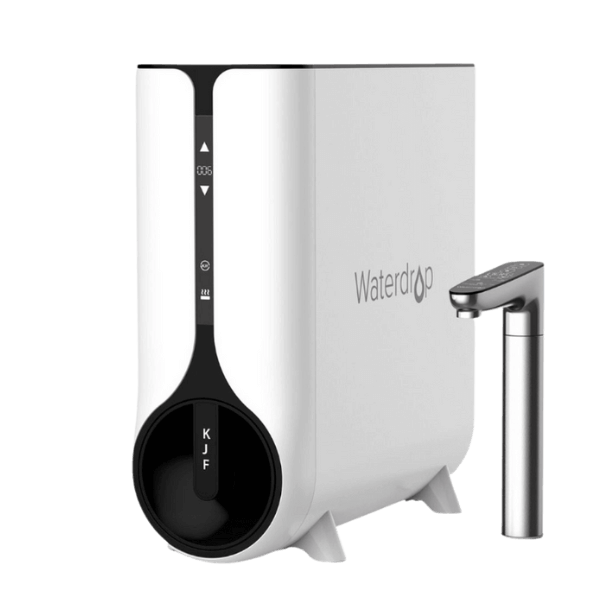
The Waterdrop
RO system, for instance, integrates both RO technology and carbon filtration. This combination offers a more potent
approach to assist you in efficiently reducing radioactive substances.